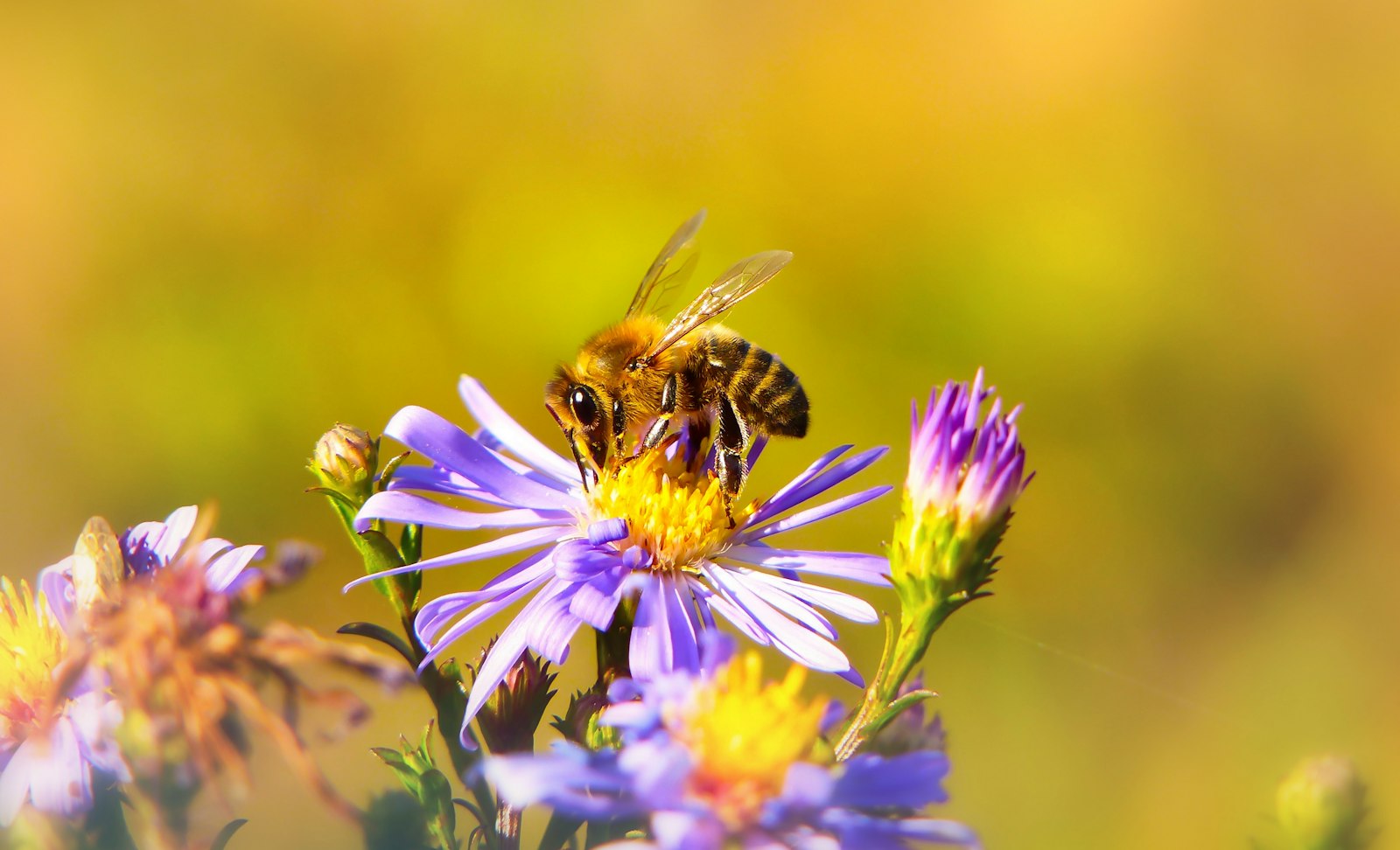
A honeybee can fly several kilometres from its hive to find flowers and return in a straight line, carrying a load of nectar and pollen. How it manages that has fascinated scientists for a century.
Bees use the sun as a compass, and they keep track of its movement across the sky through the day. On cloudy days they can still find it, by reading the pattern of polarised light in patches of blue sky. Along the route, they also remember landmarks.
Back at the hive, a forager shares what it has found with the waggle dance: a figure-of-eight run on the comb, where the angle of the straight part shows the direction of the flowers relative to the sun, and its length shows the distance. Karl von Frisch, who decoded the dance, shared the Nobel Prize in Physiology or Medicine in 1973.
















The waggle dance still sounds like science fiction to me.
My grandfather kept bees and swore they knew him. Maybe they did.